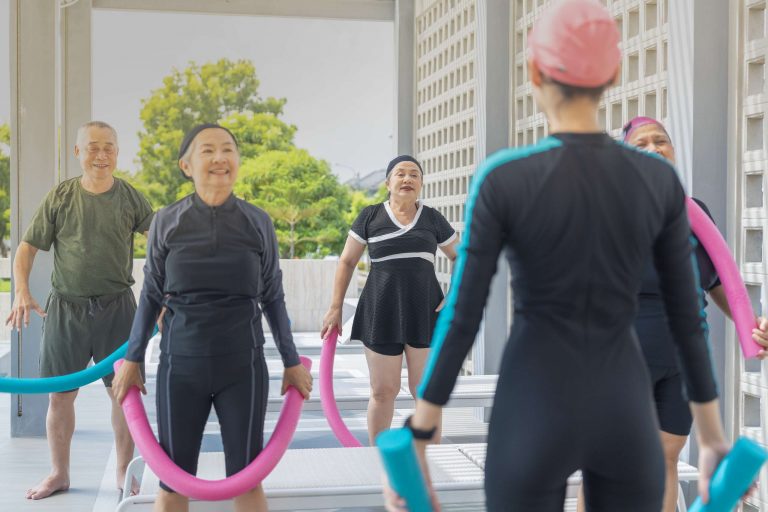
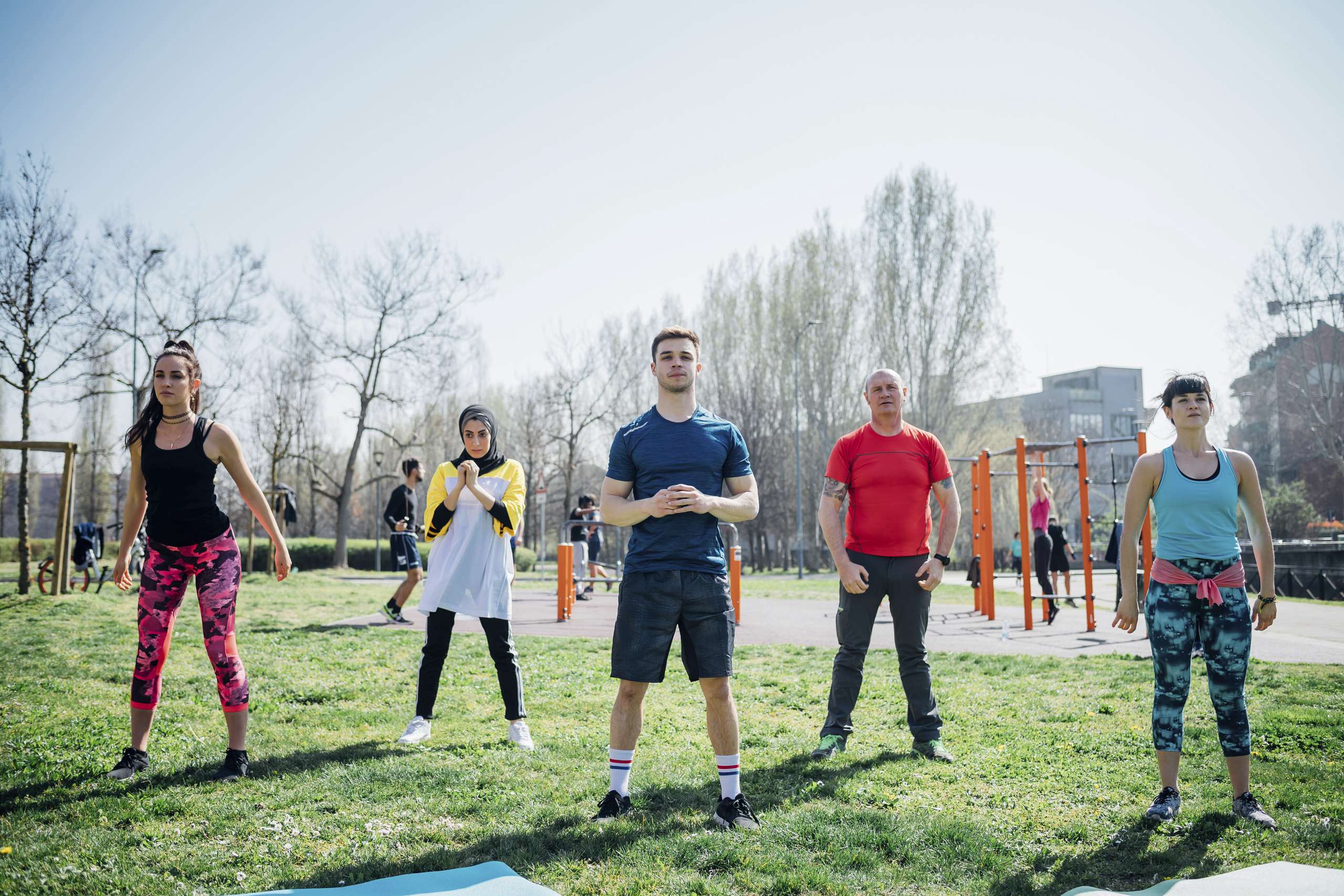
The first few weeks of exercise can feel awkward. The movements will feel clumsy, the breathing will be heavy and noisy, and confidence will quickly fade. The solution here is not to push harder, it’s to make your movements feel more familiar. You need to learn the patterns before you can get strong or endure for long periods. Basic movements such as controlled squats, slow arm circles, or simply walking at a moderate, consistent pace will help you regain coordination, which in turn will make your joints and muscles ready for more challenging activities in the future.
In those first few weeks, try to focus less on the number of repetitions you’re doing, and more on how the movement feels. When you’re doing a squat, only lower yourself as far as you comfortably can while keeping your feet flat on the ground and your back straight. When you stand back up, do it slowly and smoothly, don’t bounce. This will help teach your body control and balance, which are crucial for avoiding injuries and making it easier to make progress in the future. If it feels sharp or unstable, don’t go as deep or fast, don’t try to push through it. You get fitter by repeating good movements, not by enduring discomfort.
A very common error is trying to emulate some advanced workout routine you found online, but after only three or four days you’re so exhausted you can’t go anymore. When you push yourself to the point that you’re more exhausted than recovered, you won’t be able to keep coming back. A good rule of thumb is to try to finish each workout feeling like you’re a bit challenged, but you could do the same thing again tomorrow. Stopping early might not feel rewarding, but it will help your body establish a new habit that it will accept rather than fight against. And over time, the same workout will become easier, which will let you know it’s okay to increase the intensity a bit.
A basic fifteen-minute workout can be beneficial if you do it consistently. Start with a few minutes of getting your joints loose with some light movement, like shoulder rolls and slow marching in place. Then spend a few minutes doing a couple of basic strength-building exercises while focusing on keeping your breathing smooth and even, resting for a bit between each one. Finally, spend the last few minutes walking slowly until you catch your breath. This little cycle helps your body practice being mobile, strong, and recovered, without putting too much stress on your systems.
You probably won’t notice dramatic improvements right away. But you will start finding that everyday tasks feel a bit easier, climbing stairs feels less daunting, and your posture will improve without even realizing you’re doing it. And when you find your motivation flagging, just remind yourself that the goal is familiarity. Your body is adapting, and it’s storing each repetition as useful experience. So every time you come back, even if it’s just for a few minutes, you’ll be reinforcing that adaptation and keeping the momentum going.